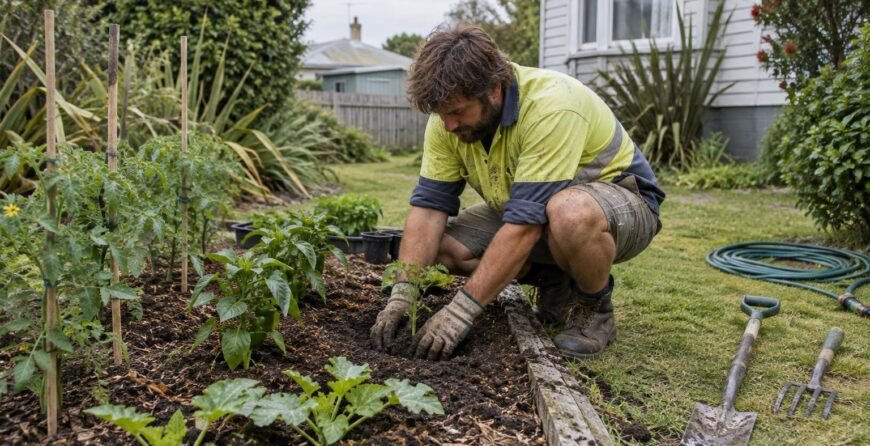
Auckland’s summer can deliver everything from warm, humid days to sudden downpours—yet it is still one of the best windows to grow an abundant vegetable garden. If you’re wondering what veggies to plant in summer NZ, knowing which crops suit local conditions can make the difference between a thriving harvest and a disappointing one.
From tomatoes and courgettes to cucumbers, capsicums, eggplant, kumara and pumpkins, each crop has its own planting window and preferred method. Choosing the right varieties, improving heavy clay soil and watering wisely are essential for Auckland’s subtropical climate.
Let’s explore the best summer vegetables for Auckland gardens, with practical guidance from Garden Services Auckland to help you plant, maintain and enjoy a productive garden from December through February.
- Plant for Auckland’s warm, humid summer: Tomatoes, courgettes, capsicums, cucumbers, eggplant, kumara and pumpkins thrive when planted from spring into early summer, with summer running December to February.
- Build strong soil before planting: Improve Auckland’s heavy clay and volcanic soils with organic compost, mulch and well-rotted manure. Add raised beds or containers where drainage is poor, especially for crops sensitive to root rot.
- Choose the right method for each crop: Direct-sow fast crops such as beans, beetroot and cucumbers, while starting tomatoes, capsicums and eggplant in seed trays for a head start.
- Water deeply but water wisely: Check soil moisture regularly, as Auckland’s summer rainfall can be unpredictable. Water at the base during dry spells, mulch to retain moisture and reduce weeds, and inspect plants for pests and fungal disease.
- Grow herbs alongside your crop: Basil, chives, parsley and thyme suit summer planting and attract beneficial insects, while regular harvesting keeps the garden productive and flavours meals with fresh New Zealand-grown herbs.
What Veggies to Plant in Summer in NZ for Auckland Gardens
Auckland’s summer planting window runs from December to February, but the best what veggies to plant in summer nz decisions begin in late spring. Many warm-season crops establish more reliably when sown from October into November, while December planting can still succeed where soil is warm, drainage is good and space remains available. Gardeners aiming for autumn and winter harvests should use summer to prepare soil, raise seedlings and plan succession planting. This best summer vegetables for Auckland gardens guide reflects local conditions rather than a generic planting calendar.
Understanding Auckland’s warm, humid summer conditions
Heat, humidity, intense sunshine and unpredictable rainfall make Auckland distinct from cooler parts of New Zealand. Coastal sites may face salty winds and drying root zones, sheltered suburbs can trap humidity, and exposed inland gardens may dry quickly. Choose heat- and humidity-tolerant varieties, provide excellent drainage and avoid overcrowding. Auckland’s heavy clay and variable volcanic soils also mean that planting dates should follow soil moisture and temperature, not simply the calendar.
Best Summer Vegetables to Plant in Auckland
Among the summer vegetables to plant nz, tomatoes (Solanum lycopersicum) and eggplant (Solanum melongena) need a sunny position, steady moisture and strong airflow. Plant tomatoes 45–60 cm apart and bury the stem deeply; use a stake or support for most varieties. Capsicums (Capsicum annuum) prefer 40–50 cm spacing and shelter from strong wind. Eggplants generally need at least 50 cm between plants.
Courgettes and pumpkins (Cucurbita pepo) should be direct-sown 5 cm deep with 60–90 cm between hills. Their broad leaves require room for airflow. Cucumbers (Cucumis sativus) can be sown 2 cm deep, 30–45 cm apart and trained vertically where space is tight. Beans (Phaseolus vulgaris) need rich soil, 10–15 cm between plants and a trellis or other support. Direct-sow every three to four weeks rather than all at once for a longer harvest. Beetroot (Beta vulgaris) can be sown 1–2 cm deep, 8–12 cm apart, with another small sowing four weeks later.
Kumara (Ipomoea batatas) is best planted into prepared soil once danger of frost has passed, commonly from late spring into early summer. Space plants 35–45 cm apart and avoid fresh manure. For balcony growers, dwarf beans, beetroot, cherry tomatoes and compact cucumber or courgette varieties are useful starting points. Learn more through the growing vegetables in summer guidance.
Direct Sowing Versus Starting in Seed Trays
Direct-sow beans, beetroot, cucumbers, courgettes and pumpkins because their root systems dislike disturbance. Plant several seeds per position, thin seedlings carefully and keep the soil consistently moist until germination. Tomatoes, capsicums and eggplant benefit from seed trays, which allow controlled warmth and protected early growth.
Use a free-draining seed-raising mix and keep pots bright and evenly watered. Before transplanting, harden seedlings off gradually over seven to ten days. Avoid rushing them into saturated clay soil, as transplant shock and poor establishment are more likely. The gardening 101 guide explains how soil preparation and gradual acclimatisation support stronger plants.
Preparing Auckland Soil for Summer Vegetables
Test drainage by digging a 30 cm hole, filling it with water and checking whether it empties reasonably quickly. Improve heavy clay with mature organic compost and well-rotted manure worked through the upper soil; do not add fresh manure immediately before planting because it can burn roots and encourage excessive leafy growth. Volcanic soil varies considerably between sites, so add compost based on texture rather than assuming it needs the same treatment as clay.
Raised beds improve drainage and root access, while containers need generous drainage holes and quality potting mix. Organic mulch such as straw or untreated wood chips helps conserve moisture, but keep it clear of plant stems and watch for slugs. This preparation creates the foundation for a productive summer vegetable planting guide nz approach.
Watering Wisely Through Auckland’s Summer
Check soil moisture instead of following a rigid schedule. Water deeply at soil level, directing water slowly so clay does not become compacted or runoff forms. Containers and raised beds need extra checks because they dry faster, but they can also become waterlogged during heavy rain. Water in the morning where possible, and ensure excess water can drain away. Improve airflow, stake sprawling crops and use mulch to moderate moisture without sealing the soil surface.
Managing Pests and Summer Diseases
Inspect plants weekly, focusing on leaf undersides and growing tips. Remove slugs and caterpillars by hand, use physical barriers around vulnerable plants and attract beneficial insects with flowering herbs. Control aphids and whitefly early through regular inspection and water sprays, avoiding broad-spectrum treatments that also harm useful insects. Rotate crop families, remove infected leaves and avoid overhead watering to reduce damp-related fungal disease. Good spacing and airflow are among the most effective preventive measures.
Summer Herbs to Plant Alongside Vegetables
Basil (Ocimum basilicum) thrives in warmth and well-drained soil; harvesting regularly encourages compact growth and provides nectar for pollinators. Chives (Allium schoenoprasum), parsley (Petroselinum crispum) and thyme (Thymus vulgaris) add compatible flavour and attract beneficial insects. Basil prefers sunny, moist ground, while thyme needs sharp drainage. Replace tired annual basil and parsley with fresh seedlings, and trim thyme without cutting into old, bare wood.
Planting and Care Checklist for a Bountiful Summer Garden
- Prepare: Improve soil with mature compost and confirm drainage.
- Propagate: Raise tomatoes, capsicums and eggplant; harden off before planting.
- Stagger: Sow beans, beetroot, cucumbers and courgettes in small batches.
- Plant kumara: Add it when soil is warm and danger of frost has passed.
- Add herbs: Plant basil, chives, parsley and thyme for harvesting and pollinators.
- Maintain: Water according to soil moisture, mulch lightly and inspect weekly for pests or disease.
- Harvest: Pick vegetables regularly to encourage continued production.
Garden Services Auckland can help Auckland homeowners prepare garden beds, improve drainage and maintain productive plantings through summer’s variable heat and rainfall.
Build a Productive Auckland Summer Garden
Successful summer planting in Auckland depends less on the calendar than on warm soil, effective drainage and careful spacing. Choosing heat- and humidity-tolerant crops, staggering sowings and matching direct-sown vegetables to suitable seed-tray varieties can provide steadier harvests. Sound preparation, measured watering, strong airflow and weekly pest checks are equally important for managing unpredictable heat and rainfall.
Follow the practical advice in growing vegetables in summer, or let Garden Services Auckland prepare your beds. With consistent care and timely succession planting, your garden can deliver fresh produce well beyond summer.