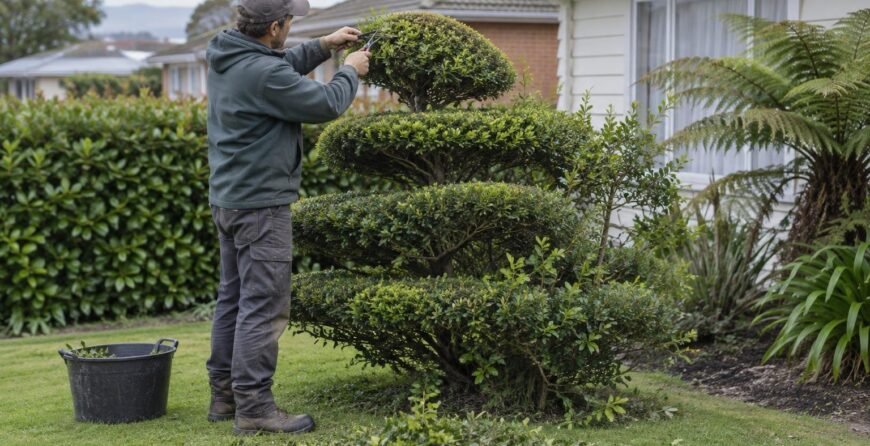
Imagine transforming an ordinary tree into a living sculpture—one with distinctive tiered canopies that float like clouds and instantly elevate your entire garden. This isn’t fantasy; it’s cloud pruning, an ancient Japanese Niwaki technique that’s gaining serious momentum among Auckland gardeners who want something truly special.
Cloud pruning isn’t just about aesthetics, though the results are stunning. It’s about understanding your trees, respecting Auckland’s subtropical climate, and having the expertise to shape plants in ways that make them thrive for decades. Whether you’re drawn to the serene elegance of a cloud-pruned buxus or the dramatic presence of a shaped totara, this gardening art form rewards patience, precision, and local know-how.
In this guide, we’ll explore what cloud pruning actually is, which plants flourish in Auckland’s warm, humid conditions, when to prune throughout the southern hemisphere seasons, and why working with local specialists transforms this intricate process from intimidating to inspiring.
- Cloud pruning transforms ordinary trees into living sculpture: This Japanese Niwaki technique creates distinctive tiered, cloud-like canopies that elevate garden aesthetics and work beautifully in Auckland’s subtropical climate.
- Auckland’s warm, humid conditions suit heritage plants perfectly: Buxus, yew, Japanese privet, podocarpus, and totara thrive in our climate and respond exceptionally well to cloud pruning techniques.
- Seasonal timing matters in the southern hemisphere: Spring (September–November) and autumn (March–May) are optimal for Auckland cloud pruning, avoiding our summer heat and winter dormancy.
- Professional expertise saves years of trial and error: Specialist cloud pruning requires precise technique, ongoing maintenance schedules, and knowledge of local microclimates—invest in local expertise for guaranteed results.
Understanding Cloud Pruning: The Art of Niwaki in Auckland Gardens
Cloud pruning, known as Niwaki in Japanese gardening traditions, is a sophisticated horticultural technique that transforms ordinary trees and shrubs into living sculptures. The term “Niwaki” literally means “garden tree,” and the practice represents centuries of Asian horticultural philosophy—creating harmony between nature and human artistry. Rather than shaping plants into rigid geometric forms, Niwaki celebrates the natural structure of the tree whilst refining it into graceful, cloud-like tiers of foliage. This aesthetic approach has captivated Auckland gardeners seeking to elevate their outdoor spaces with elegance and contemplative beauty.
However, most international cloud pruning guidance misses a critical point: Auckland’s subtropical climate, humid summers, and year-round growth patterns demand entirely different timing and techniques than Northern Hemisphere advice. When you read that “early or late summer” is ideal for cloud pruning, that advice assumes the cooler, drier conditions of the UK or northern Europe—not Auckland’s warm, wet seasons. Our region’s unique growing rhythm requires Auckland-specific knowledge to ensure your cloud-pruned specimens thrive rather than struggle.
Best Plants for Cloud Pruning in Auckland Gardens
Selecting the right plant is the foundation of successful cloud pruning. Auckland’s subtropical climate and volcanic soils create ideal conditions for a diverse range of species, including both heritage choices and native alternatives that respond beautifully to Niwaki techniques.
Buxus (Box) remains a classic choice, prized for its dense foliage, slow growth, and ability to hold a refined shape. Japanese box (Buxus microphylla) performs exceptionally well in Auckland’s mild winters and offers finer texture than English varieties. Pittosporum, a hardy and drought-tolerant native shrub, develops an elegant form when cloud-pruned and thrives in Auckland’s coastal and inland gardens alike. For those seeking native sophistication, totara (Podocarpus totara) and podocarpus create stunning cloud-pruned specimens with architectural presence—their needle-like foliage and naturally columnar structure lend themselves beautifully to layered pruning.
Puriri (Vitex lucens), another native treasure, develops impressive cloud-pruned forms in warmer Auckland microclimates and adds bold, sculptural interest. Japanese privet responds well to regular shaping, whilst yew, though slower-growing than many alternatives, rewards patience with dense, velvety foliage ideal for fine detailing. Each species responds differently to Auckland’s humid, warm-season conditions—totara and podocarpus, for instance, benefit from spring growth surges triggered by our September to November rains, quite different from European box’s response patterns.
Seasonal Timing: Why Auckland’s Calendar Differs from International Advice
This is where Auckland gardeners must reject generic online guidance and embrace local expertise. Most cloud pruning articles reference “summer” or “early autumn” pruning—advice rooted in Northern Hemisphere seasons. In Auckland’s southern hemisphere calendar, this creates confusion and potential plant stress.
Spring (September–November) and autumn (March–May) are optimal for cloud pruning in Auckland. Spring pruning aligns perfectly with our vigorous growing season; plants respond immediately to new growth cycles triggered by warming temperatures and increased rainfall. Autumn pruning allows plants to harden off before winter dormancy slows recovery. Conversely, summer (December–February)—our hottest, often driest season—is risky; pruning during heat stress leaves plants vulnerable, and the intense sun can scorch newly exposed foliage.
Auckland’s humid summers and year-round mild conditions mean growth never truly stops, giving professional pruners flexibility unavailable in colder climates. However, timing within our local season remains crucial for optimal results and plant health.
Professional Cloud Pruning Services versus DIY Attempts
Whilst enthusiastic gardeners can perform basic maintenance, true Niwaki artistry demands specialised knowledge. Professional cloud pruning services offer expertise in shaping, balancing tiers, selecting cutting points, and understanding each species’ growth habits—especially critical in Auckland’s unique subtropical conditions.
Professional landscape designers and experienced teams can assess your garden’s microclimate, recommend species suited to your site, and create a long-term maintenance plan. They understand how our volcanic soils, coastal salt spray, shaded courtyards, and warm zones influence plant performance and pruning success—knowledge that ensures your investment in cloud-pruned specimens yields years of beauty and satisfaction.
Bringing Niwaki Artistry to Your Auckland Garden
Cloud pruning transforms Auckland gardens into living galleries of botanical art, but success demands understanding our subtropical climate rather than following international guidance. Spring and autumn pruning, species selection suited to our volcanic soils and humid conditions, and alignment with our southern hemisphere seasons are essential. Whether you choose hands-on gardening or professional cloud pruning services, the key is respecting Auckland’s unique growing rhythms.
Ready to elevate your outdoor space? Expert landscape designers can guide your journey into Niwaki, creating specimens that thrive for decades. Let Auckland’s climate work for you, not against you.